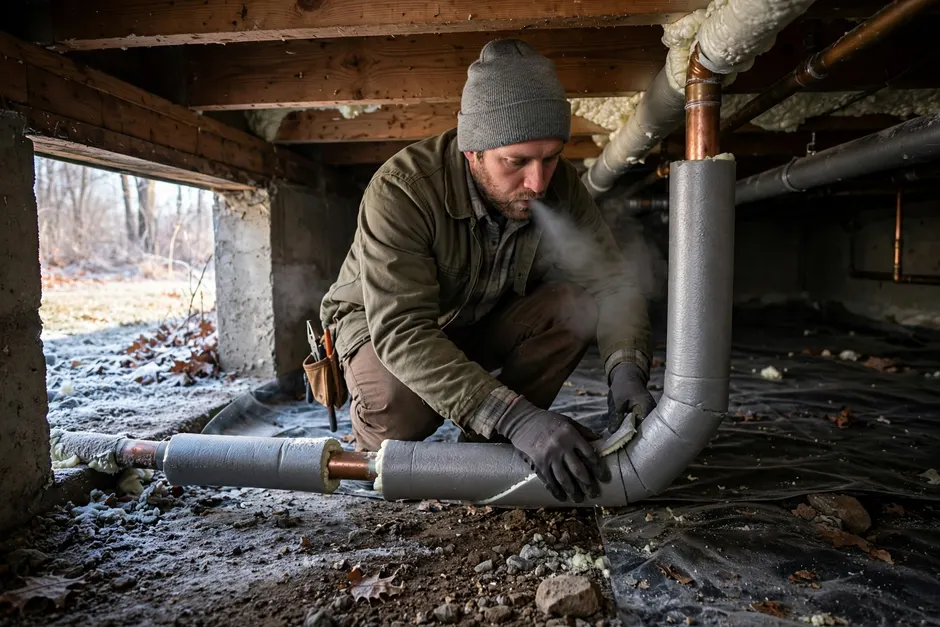
Most burst pipes in Thompson's Station are preventable in October. Insulate exposed crawl-space and garage pipes, take hoses off outside taps and drain them, seal the worst draughts, and make sure everyone in the house can find the main shutoff. When a hard freeze lands anyway, a slow drip from the furthest tap and open cabinet doors under sinks are the habits that save pipes at 2AM.
Why pipes burst here, of all places
Middle Tennessee winters are mild on average and sharp in episodes, and it is the episodes that burst pipes: several nights well below freezing, often with wind, arriving after weeks when nobody was thinking about plumbing. Water expands as it freezes, and the break usually comes from pressure between the ice and a closed tap rather than from the ice itself, which is why a pipe can split away from the coldest spot and why the leak often reveals itself during the thaw, when the ice lets go.
The local risk map is predictable. Crawl-space runs near vents and on north walls lead the list, followed by pipes in unheated garages, lines to outside taps left charged with a hose attached, and the plumbing of bonus rooms over garages. Thompson's Station's mix of farmhouses, crawl-space homes off Thompson's Station Road and newer subdivisions in Emberly and Tollgate Village all carry some version of this map. October stories from Tennessee plumbers, ours included, exist because January callouts taught everyone the same lesson.
The October routine, in full
Walk the crawl space or send a torch in ahead of you: insulate every exposed supply run you can reach with foam sleeves, paying double attention to elbows near vents and the north wall. Outside, remove hoses (a hose left on traps water in the tap body, the classic split), close the inside valve for each hose tap if your home has them, open the outside tap to drain, and fit an insulated cover. In the garage, insulate the runs serving laundry and any bonus room above. Find the main shutoff, exercise it gently, and label it. Take a photo of the water heater's valves while you are in a labelling mood.
Seal what you can see: a crawl-space vent that no longer closes, a gap where pipes pass through the foundation, a draughty access hatch. You are not building a sauna; you are removing the wind paths that strip heat from pipes on the coldest nights. Then tell the household the freeze plan out loud, because the person home during the freeze is rarely the person who read the article.
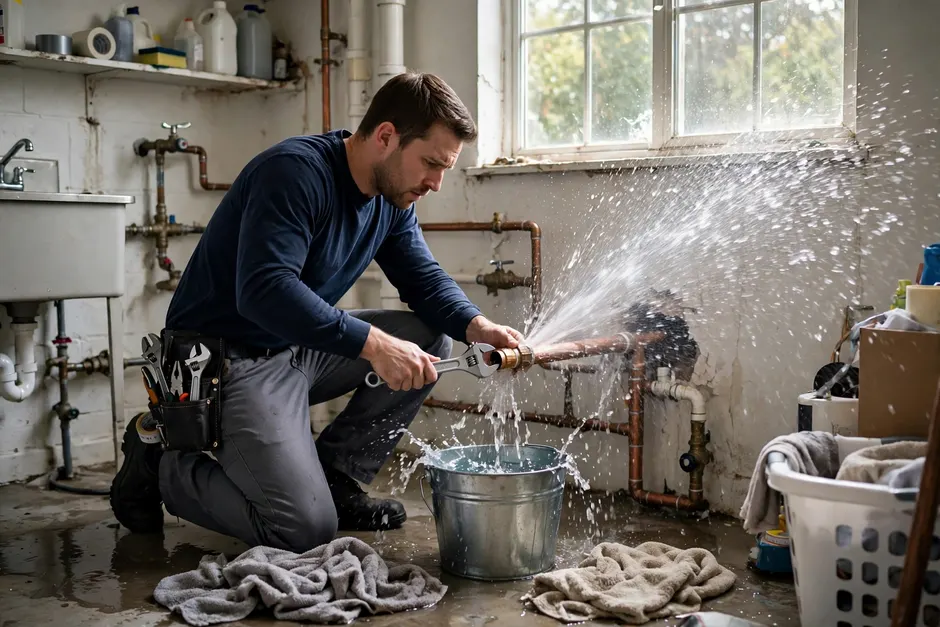
When the hard freeze arrives anyway
On nights forecast well below freezing, let the tap furthest from where water enters the house drip slowly, a stream about the width of a pencil lead is plenty, and open the cabinet doors under sinks on outside walls so house heat reaches the pipes. Keep the heating on at a steady setting through the night; the small fuel cost is not comparable to a burst. If you travel during a cold spell, the safest settings are heat left on, water off at the main, and a neighbour with your number.
If a tap stops flowing entirely on a freezing morning, a pipe may be frozen rather than burst. Close the main if you suspect a split, and do not attack the pipe with a flame or a space heater aimed and abandoned. Gentle warmth and patience, or a call to us, in that order. A frozen pipe found early is a story. The same pipe found at the thaw, by the ceiling stain, is a claim.
| Spot | What it points to |
|---|---|
| Crawl-space run by a vent | Insulate, close or cover the vent |
| Outside tap with hose attached | Hose off, drain, insulated cover |
| Garage or bonus-room lines | Insulate, keep garage doors closed in freezes |
| Any pipe that froze before | It is telling you something; protect it first |