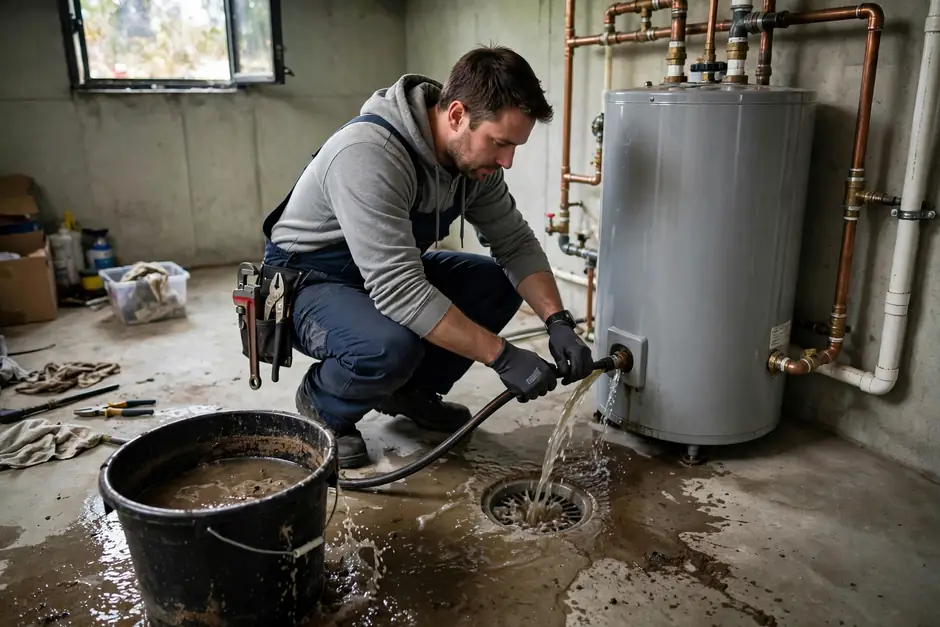
1Safety and first checks
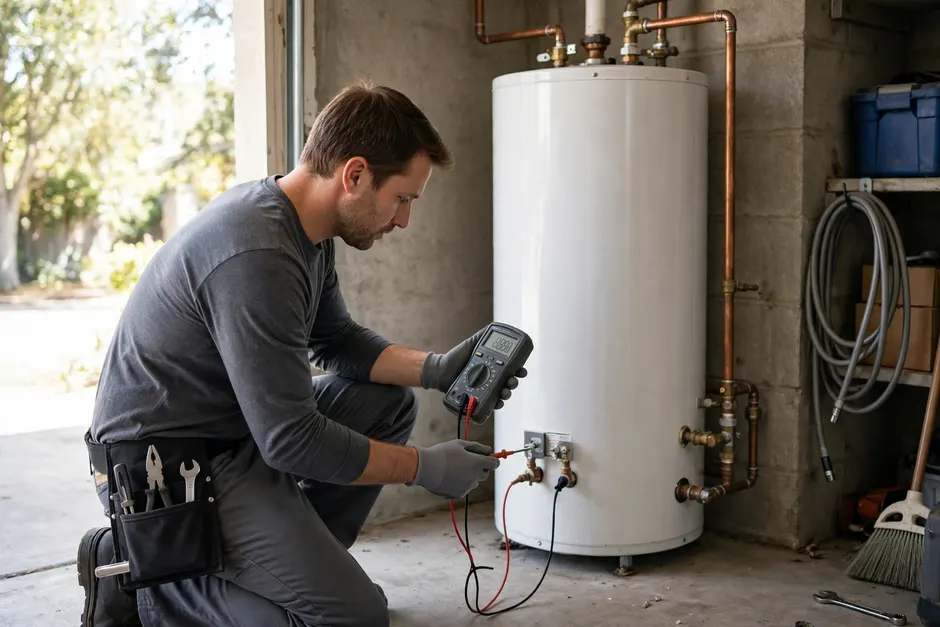
We confirm power or gas supply, check the breaker and the unit's reset, and look for active leaking first. A tank leaking from its body is a replacement conversation. A leak at a fitting, valve or element port is often a repair.
2Test the heating system
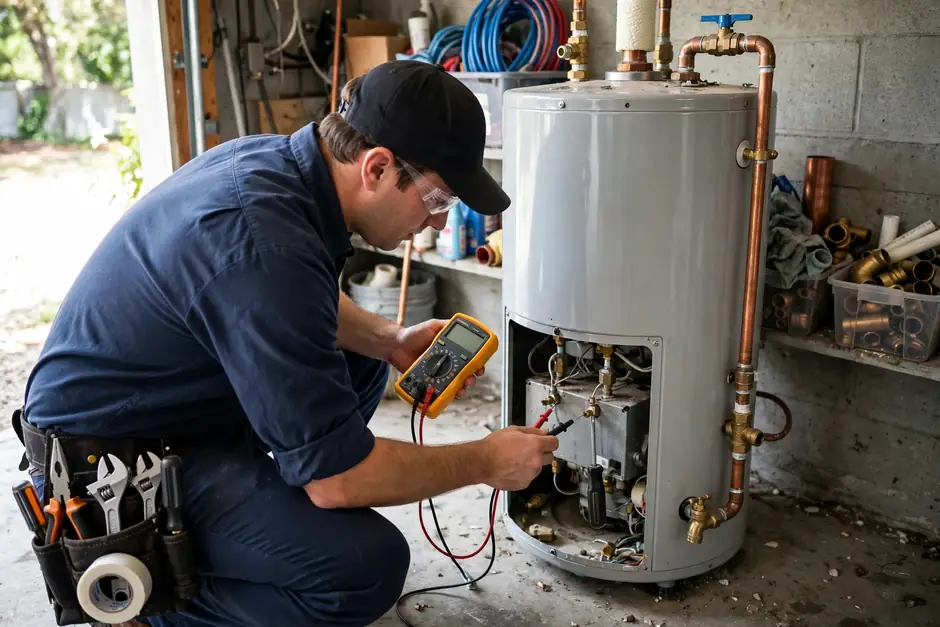
On electric units we test elements and thermostats with a meter. On gas units we check ignition, thermocouple or flame sensing, and the gas control. Limestone scale from Middle Tennessee water coats elements and buries lower elements in sediment, and both show up clearly in testing.
3Repair with the right part
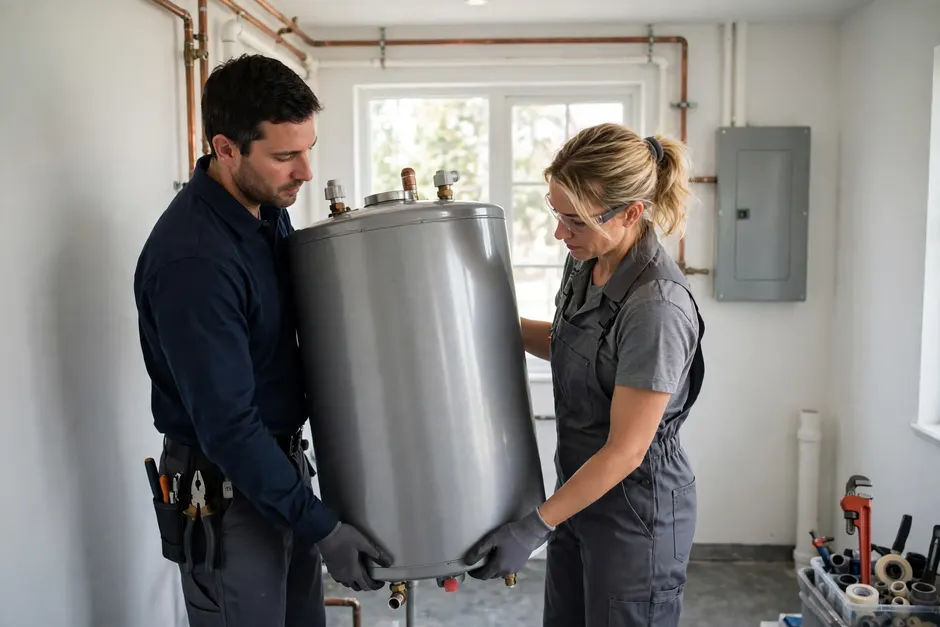
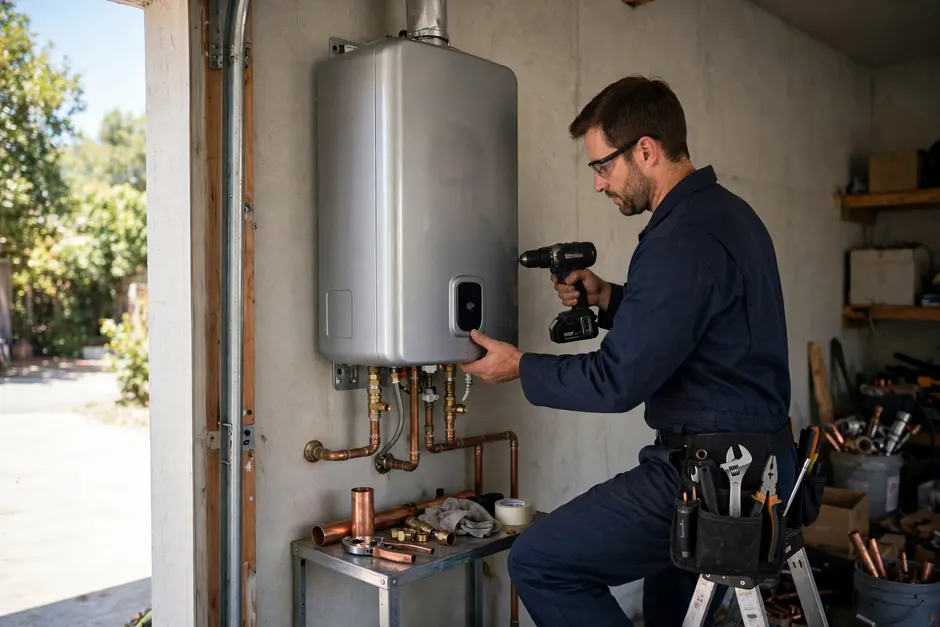
Elements, thermostats, anode rods, pressure relief valves, drain valves and ignitors are replaceable parts. We fit the correct rating for your unit, refill and purge air properly, and never restart a unit dry.
4Verify temperature and recovery
We confirm the outlet temperature matches the setting, watch a full heating cycle, and check every joint we opened. You get the honest remaining-life picture: sound tank, ageing tank, or start planning.