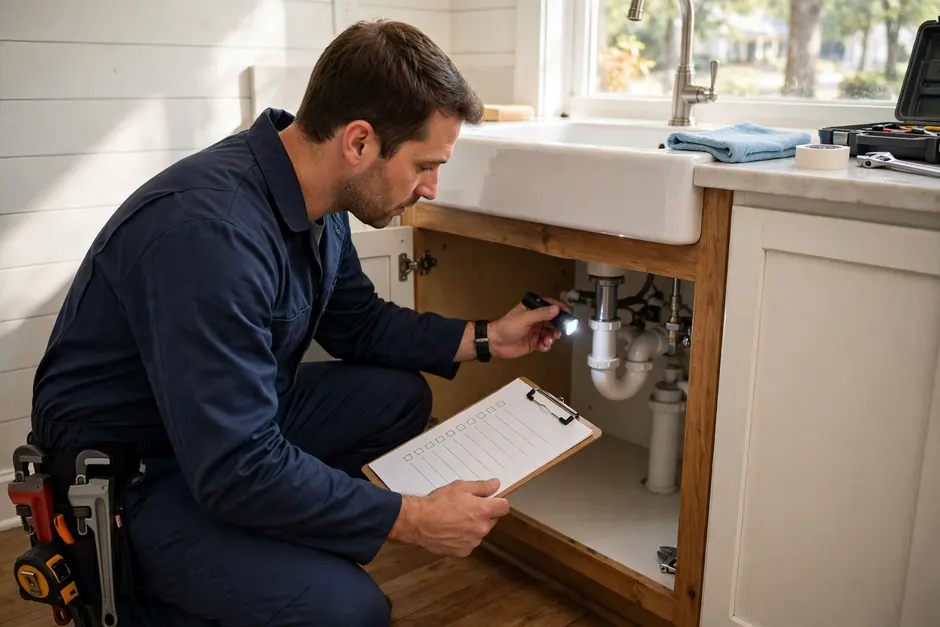
Work the seasons. In autumn, insulate crawl-space pipes, drain hose taps and flush the water heater before winter loads it. In spring, test the sump pump before the rains and check for winter damage. Year-round, exercise shutoff valves, dye-test toilets twice a year, and glance at supply hoses and the heater pan monthly. Most plumbing emergencies in 37179 begin as checklist items nobody reached.
The autumn visit that prevents January
October is when Tennessee plumbers talk about pipes, because it is the last comfortable month to protect them. Insulate exposed crawl-space and garage runs, especially on north walls. Take hoses off outside taps, close their inside valves if fitted, and drain them. Flush the water heater and note the anode's years. Test every shutoff that matters (main, heater, toilets, sinks) by closing and opening it gently, because a valve that will not move in October will not save you in January either. Walk the yard while leaves are down and look for the soft, green patch that betrays a service line leak.
Finish indoors: look under every sink with a torch, run a dry hand around traps and supply joints, and check the washing machine hoses for bulges or rust at the ends. Rubber hoses have a life, and their failure is one of the great unglamorous floods. Braided replacements and a pan under the machine are boring purchases that read like genius after the fact.
Spring: water from the sky
March to May is Thompson's Station's rain season, and the sump pump is either ready or it is a decoration. Pour a bucket of water into the pit and watch a full cycle: float up, pump on, water out, check valve holding, pump off. Follow the discharge line outside and confirm it still sends water away from the foundation. Then check the low ground: homes near the West Harpeth River and Kennedy Creek bottoms should confirm drains and floor drains are clear before the sky tests them.
Spring is also leak season's reveal. Winter's small freeze cracks often declare themselves as the ground thaws and use rises. A meter reading taken on a quiet morning, compared with one an hour later with everything off, is the cheapest whole-system leak scan you own. Do it twice a year and write the numbers down.
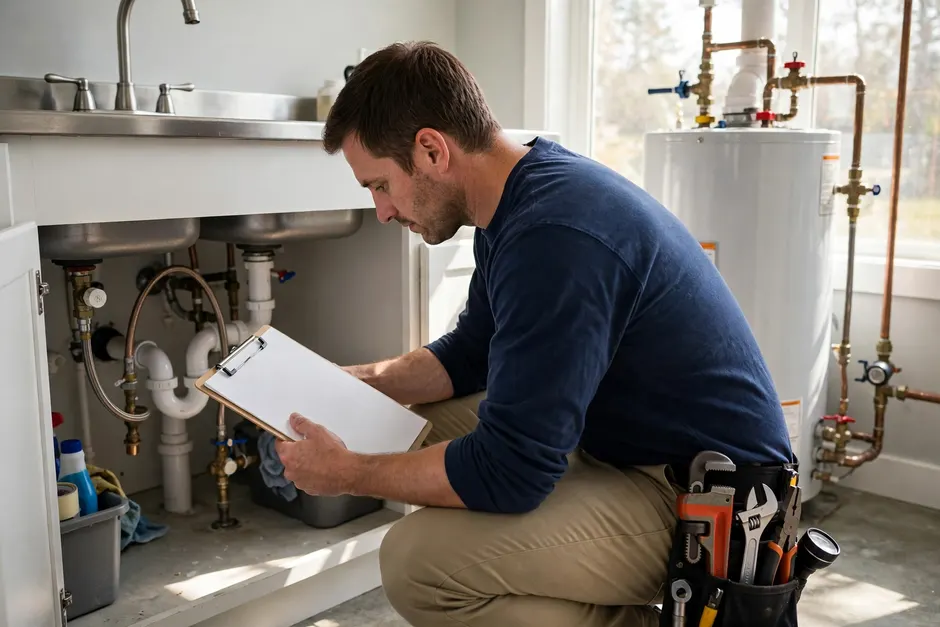
The monthly five minutes
Glance at the water heater: any moisture at the base, any new rust streaks, any drip from the relief valve's pipe. Look at the expansion tank and tap it: it should sound hollow on its air side, not uniformly dull and waterlogged. Check under the kitchen sink, the hardest-working cabinet in the house, and feel the disposal's underside for damp. Run each bathroom's taps if guests have been absent, keeping traps full of water so drain smells stay in the drain where they belong.
Twice a year, put dye in every toilet tank and check bowls a quarter hour later. Toilets are the most common silent water waste in the county, and in a five-bathroom house in Bridgemore Village or Fields of Canterbury, two passing flappers can outspend every other item on this checklist combined.
Keep the one-page record
Write down, on paper or in your phone: the main shutoff location, the meter location, the heater's age and last flush, the anode's last check, your softener's settings, and the date of the last sump test. When something fails at 11PM, that page is the difference between a controlled call and a wet scramble. If you would rather the whole rhythm lived with us, our maintenance plan visit covers the autumn list in one trip, with the findings written up exactly like that record.
| Season | What it points to |
|---|---|
| Autumn | Insulate, drain hose taps, flush heater, test valves |
| Winter | Drip taps in hard freezes, know the main shutoff |
| Spring | Bucket-test the sump pump, meter leak scan |
| Summer | Check irrigation and backflow device, watch the bill |