In Detail
Garbage Disposal Repair: The Detail That Decides It
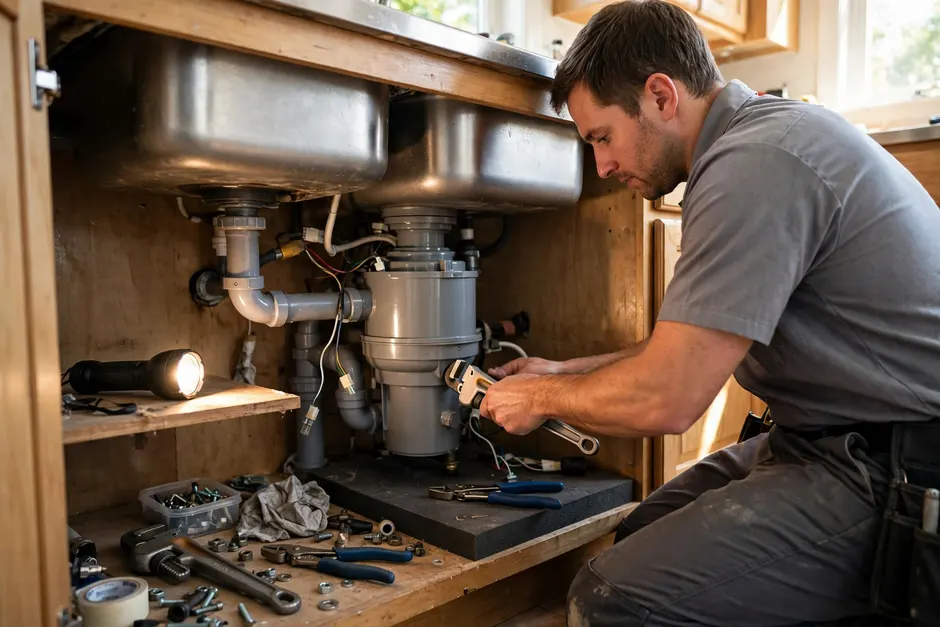
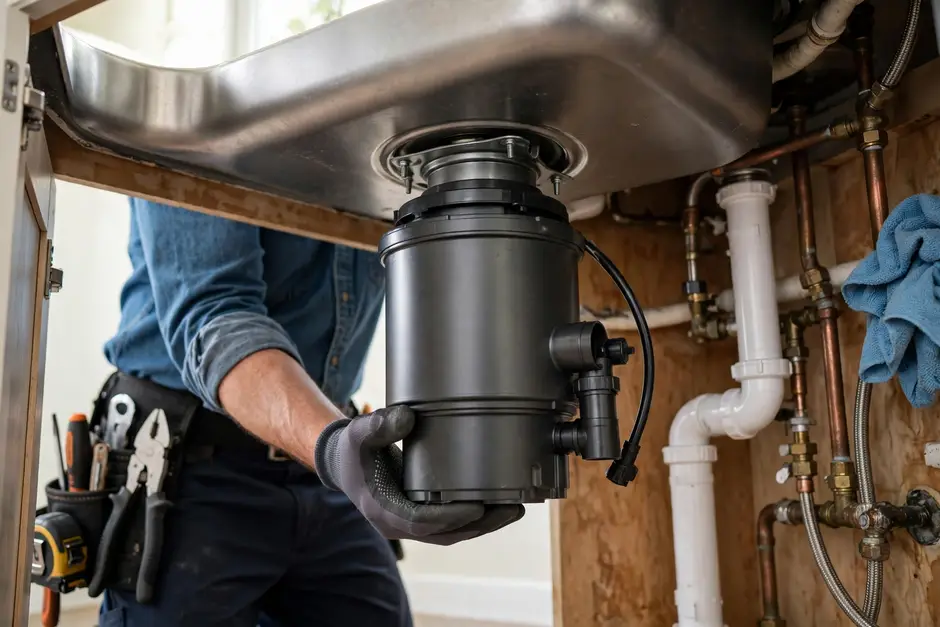
Safety first in print, because this appliance invites brave fingers. Nothing goes into the chamber while the unit can run: power off at the switch, and off at the breaker for any work beyond a reset. The reset button and the hex socket underneath exist precisely so a jam can be freed from below, with the flywheel turned by hand while the power is dead. Most 'dead' disposals we attend in Thompson's Station are jammed, tripped, or both, and come back to life in minutes once a bottle cap or a stone from a plant pot is fished out with tongs. The failures that end units are quieter: water appearing beneath the machine, which means the internal seal has surrendered and the motor is bathing; a reset that trips again under an empty grind; a housing cracked by corrosion from below. We will always attempt the honest revival first. A disposal's dignity, like a plumber's, is mostly a matter of not being asked to swallow the impossible. The electrical side deserves its own paragraph, because half of disposal behaviour is motor behaviour. A jammed flywheel holds the rotor still while current keeps arriving, and the windings heat until the overload protector, which is the reset button's real job, cuts the circuit to save the motor from itself. That is why a unit that died mid-jam and revives after cooling and a reset was not being temperamental; it was being protected. Hard-wired and plug-in models fail differently, too: a plug-in unit shares its receptacle with a switched loop that can loosen over years, while a hard-wired connection hides its faults in a junction that only a meter finds. When replacement is the answer, capacity follows household size honestly, since a couple and a family of six do not grind the same loads, and batch-feed versus continuous-feed is a safety and habit choice we are glad to talk through at the sink itself. Noise is the other diagnostic language this appliance speaks, and it is worth learning to read. A healthy unit makes a brief, even roar that settles as the chamber empties. A rising rattle usually means something hard is still circulating: a fragment of bone, a fruit stone, a screw that fell from a shirt pocket into a mug and then into history. A low drumming transmitted through the whole sink points at mounting: the three-point mount or the sink flange has loosened, and the machine is drumming the steel like a skin. A splash-back through the second bowl of a double sink during a grind is a venting and baffle conversation, not a motor one. Each sound has its own address, and an experienced ear at the cabinet door can often name the fault before a single tool comes out, which is why we ask owners, without embarrassment, to imitate the noise when they call. The impressions are genuinely useful, and some of them are excellent.