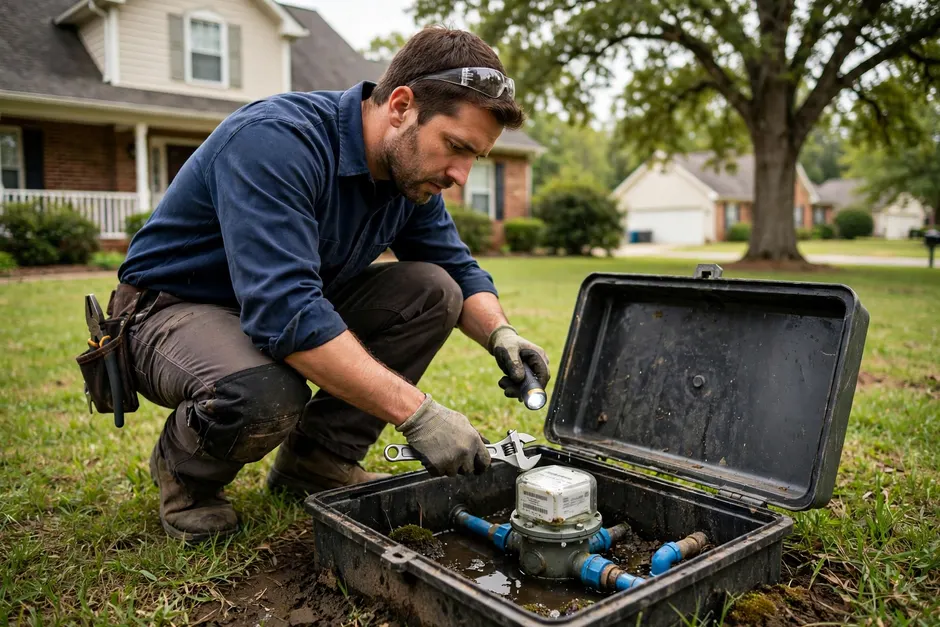
In most Thompson's Station homes, a sudden high water bill means water is running when it should not be: a toilet passing water silently, a hidden supply leak, a stuck softener or irrigation line, or a water heater relief valve dribbling. The meter test described below tells you within fifteen minutes whether you have a leak at all, and roughly where it lives.
Start with the meter test
Turn off every tap, appliance and irrigation zone, and make sure nobody flushes. Find your water meter, usually near the street, and watch the dial or the small leak indicator. If it moves with the house silent, water is going somewhere it should not. Next, close the house main valve. If the meter stops, the loss is inside the house system. If it keeps moving, the loss is in the service line between meter and house, or a line feeding irrigation, and that distinction alone halves the search.
Note the meter reading, wait an hour with everything still off, and read it again. The difference is your leak rate, and it turns a vague worry into a number. A toilet leaking a modest stream can waste hundreds of gallons a day, and a running toilet is the single most common cause we find behind bill shocks in 37179.
The usual suspects, in order
Toilets first. A flapper that no longer seals lets tank water slip into the bowl around the clock. Put food colouring in the tank, do not flush, and check the bowl in fifteen minutes. Colour there means the flapper or flush valve seal is passing, and the parts are cheap. Second, the water heater area: a temperature and pressure relief valve that dribbles into its drain line can run hot water away invisibly for weeks. Third, softeners and filters that regenerate on a timer can stick mid-cycle. Fourth, irrigation: a cracked lateral or a zone valve that never quite closes wets the soil quietly.
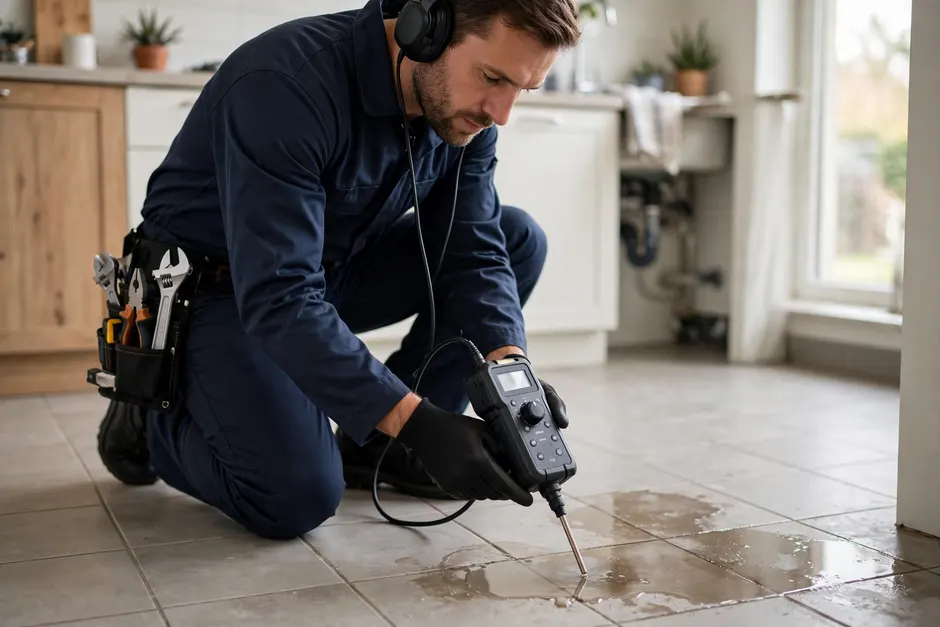
Then come the hidden ones: a supply leak under a slab, into a crawl space, or from the service line in the yard. Their indoor evidence is thin (a damp patch, a warm floor spot, a musty room) which is why our leak detection service exists. The meter test still caught them. It catches everything, because it measures the whole system at once.
What is not usually the cause
Guests, laundry and summer watering raise bills, but gradually and seasonally, and the meter sits still when the house is off. A sudden step-change with a moving meter is a leak until proven otherwise. Meter misreads do happen, but they are the rare explanation, and the isolation test separates a meter question from a plumbing one very quickly. If your meter is still with the house isolated and the yard is dry, it is time to involve your water provider, in this area HB&TS Utility District, with your test notes in hand.
One more honest entry: a bill can be accurate and still shock you if an earlier period was estimated. Your provider can tell you whether readings were actual. That is a billing question rather than a plumbing one, and we would rather point you there than hunt a leak your meter says does not exist.
When to call a plumber
Call when the meter moves with the house off and the simple suspects check out dry, when you find damp, warmth or mould you cannot explain, or when the loss is on the service line. We isolate, listen acoustically, map moisture, and open only the spot the evidence chooses. You finish with the leak located, a repair price before work, and a repeated meter test proving the system holds. That proof, plus your before and after readings, is also the paperwork some providers want when you ask about a leak adjustment on the bill.
| Bill clue | What it points to |
|---|---|
| Meter moves, house isolated stops it | Leak inside the house system |
| Meter moves with house isolated | Service line or irrigation loss |
| Meter still, bill still jumped | Check estimates, irrigation timers, guests |
| Hot water costs jumped too | Suspect the heater relief valve or a hot line leak |