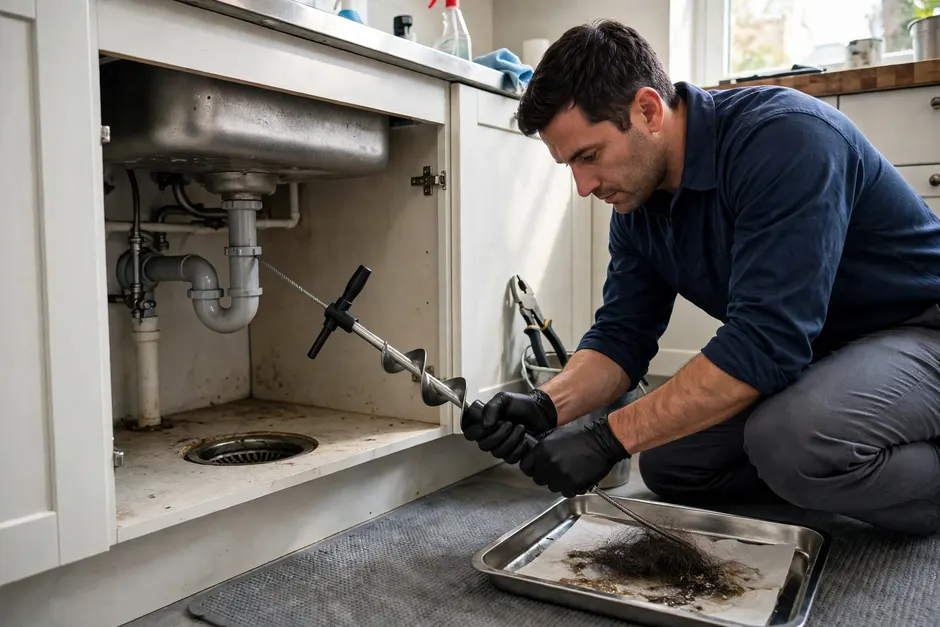
A drain that clogs once is an event. A drain that clogs again and again is a message: something inside the pipe is catching material (grease film, hair at a rough joint, roots, scale) or the pipe itself dips and holds water and solids. Clearing the clog treats the event. Finding the catch point, often with a camera, treats the message, and it is usually the cheaper road over a year.
The anatomy of a repeat clog
Pipes rarely block in clean, straight, correctly sloped sections. They block where flow slows or snags: a joint lip, a belly where the pipe sags, a patch of grease film that grabs the next load, or roots fine as hair that strain solids out of the stream. Each clearing punches a path through the blockage but leaves the catch point in place, which is why the interval between clogs often shortens. The pipe is narrowing around the cleared path, patiently, between your calls.
Location narrows the suspects fast. One fixture only: its branch or trap. Several fixtures on one level: a shared branch. The lowest fixtures in the house, especially with the washing machine running: the main line. Gurgling is the soundtrack of air being pushed around by water that cannot get away freely, and it nearly always means the problem is downstream of the noisy fixture, not inside it.
Grease, the Thompson's Station kitchen story
Our drain calls repeat one story so often it deserves its own section. Cooking grease goes down warm, coats the pipe as it cools, and every rinse adds a layer. Detergents and hot water move it along on the day and abandon it further down the line. The result is a pipe that is open in the middle and furred at the walls, perfectly shaped to catch food solids. Chemical cleaners barely touch it. A cable opens it. Hydro jetting cleans the walls and is what turns a monthly clog into a yearly non-event.
The habit change costs nothing: cooled grease into a can, plates scraped before rinsing, and the disposal treated as a finisher of scraps rather than a bin. Homeowners across our social channels admit the grease habit is the regret they would undo, and their pipes agree.
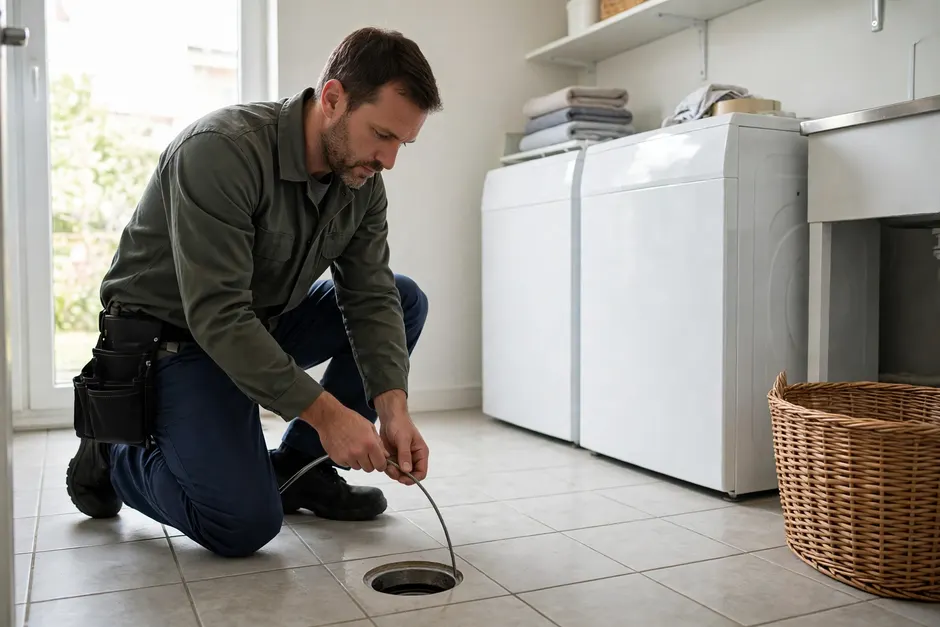
Roots, scale and sags in older lines
In established streets near Heritage Park and Thompson's Station Road, clay and cast iron lines add two more catch points. Roots enter at joints and weave a net that catches paper. Cast iron scales and rusts from inside, roughening the walls until solids hang up on the crust. Both show clearly on a camera, as does the third culprit, the sag: a section where settling soil has bellied the pipe so it holds a permanent puddle, and solids settle out of every load that passes.
Each has a different fix, which is the point of looking before treating. Roots at one joint: a repair of that joint. Scale along a sound line: jetting or descaling, then a camera verdict. A sag: the section needs re-laying at the correct fall. Treating all three with the same cable, forever, is how a household spends repair money one visit at a time.
Three Thompson's Station kitchens, three different pipes
Patterns repeat across our calls, and three kitchens from the last season of work stand for most of them. The first was a Tollgate Village townhome where the sink slowed every few months and cleared easily each time. The camera showed a long, nearly flat branch run with a grease tide-line along its lower wall. Jetting, plus a can by the cooker, ended a two-year cycle. The second was an older home off Thompson's Station Road whose problem was never the kitchen at all: the branch was sound, but the main carried a root fringe at one joint that caught the kitchen's solids as they passed. Clearing the branch had been treating the echo, not the voice. The third was a new Emberly house with a drain that clogged from its first year, and the culprit was construction grit and a section of pipe holding water from a settling run, found on camera while the builder conversation was still possible.
None of those three households needed the same remedy, and all three had already paid for the same one, more than once. That is the real cost of treating a repeat clog as a recurring chore instead of a diagnosis. The pipe knows why it clogs. Modern plumbing work is mostly the art of asking it properly, on camera, before the third or fourth clearing makes the answer more expensive than the question.
Enzyme treatments, shelf promises and other halfway houses
Between the chemical cleaners and the plumber stands a shelf of gentler promises: enzyme and bacteria treatments that claim to digest buildup while you sleep. Our honest reading, after opening a great many pipes that had been faithfully dosed, is mixed in an instructive way. As maintenance in a line that is already clean, these products may slow the return of soft film. As a rescue for an established clog, they are outmatched, because enzymes work at the surface they can reach, at the speed biology allows, while a grease tide-line or a root fringe is a physical structure that needs physical removal. Homeowners dose, wait, dose again, and call us in week three with the same slow sink and a emptier shelf.
The halfway houses share one honest use: time-buying with open eyes. If a line is slow but flowing, and a booked visit is a week away, a gentle treatment may keep it civilised in the interval. What it cannot do is change the pipe's story, and any product that claims otherwise is writing fiction on the label. The pipes that stay clear in Thompson's Station are not the ones with the most chemicals poured through them. They are the ones whose owners changed one habit, cleaned the line to its walls once, and then largely forgot the whole subject, which is the correct ending for a drain story.
When repeat clogs mean call us
Book a camera inspection when the same line has been cleared twice within a year, when several fixtures slow together, or when a main line is involved. The survey gives you a located, evidenced answer and options with prices, including the option of doing nothing yet with your eyes open. If sewage has backed into the house, treat that as an emergency call instead, and stop using water until we have seen it.
| Pattern | What it points to |
|---|---|
| Same kitchen drain, every few months | Grease film on the branch walls |
| Main line, roughly yearly | Roots at a joint or a sagging section |
| Bathroom sink, slow for weeks | Hair and soap at the trap or pop-up |
| Several fixtures, getting worse monthly | Main line narrowing: scale, roots or roots plus grease |